Writing compelling titles that rank well and drive clicks requires balancing SEO best practices with reader appeal. An SEO title generator is a software tool that automatically creates optimized page titles by analyzing keywords, search intent, and proven title formulas to help content creators craft headlines that perform well in search results.
If you're spending hours crafting the perfect title only to see mediocre click-through rates, you're not alone. The right SEO title generator can streamline this process while improving your results. This guide compares the leading tools and helps you choose the one that fits your workflow and goals.
What Is an SEO Title Generator?
An SEO title generator is a specialized tool that creates optimized page titles by combining keyword research data with proven title structures. These tools analyze search volume, competition levels, and user intent to suggest headlines that balance SEO requirements with reader engagement.
The best SEO title generators don't just stuff keywords into templates. They consider factors like character limits, emotional triggers, and search intent matching. Some integrate with analytics platforms to show how different title variations might perform based on historical data.
Most generators work by inputting your target keyword and receiving multiple title suggestions. Advanced tools incorporate features like A/B testing capabilities, SERP analysis, and integration with content management systems.
Best SEO Title Generator Tools
Free AI-Powered Options
ChatGPT and Claude
These conversational AI tools excel at creating contextual, engaging titles when given proper prompts. They understand nuance and can adapt tone for different audiences.
Best for: Content creators who want customizable, creative titles and don't mind crafting detailed prompts.
Limitations: No direct SEO data integration. Requires manual keyword research and character count verification.
Grammarly AI
Grammarly's AI writing assistant includes title generation with built-in grammar and readability optimization. It suggests improvements for clarity and engagement.
Best for: Writers already using Grammarly who want integrated title optimization within their existing workflow.
Limitations: Limited SEO-specific features compared to dedicated tools.
Dedicated SEO Tools
Ahrefs title generator
Leverages Ahrefs' massive keyword database to create titles optimized for search volume and competition. Provides SERP analysis for each suggestion.
Best for: SEO professionals who need data-backed title suggestions with competitive analysis.
Limitations: Requires Ahrefs subscription for full features. Can feel mechanical without human creativity.
SEMrush Topic Research Tool
Generates titles based on trending topics and search patterns. Includes social media performance predictions.
Best for: Content marketers focusing on trending topics and viral potential.
Limitations: Monthly search limits on free plans. Less focused on traditional SEO metrics.
Comparison of SEO Title Generator Types
| Tool Type | Strengths | Best Use Case | Pricing Model |
|---|---|---|---|
| AI Chatbots | Creative, contextual, unlimited | Custom content, unique angles | Free/subscription |
| SEO Platforms | Data-driven, SERP analysis | Competitive research, volume targeting | Monthly subscription |
| Writing Tools | Grammar optimization, readability | Content quality, engagement focus | Freemium/subscription |
| Standalone Generators | Simple, fast, template-based | Quick generation, bulk creation | Often free |
How to Use an SEO Title Generator
Step 1: Keyword Research First
Before using any title generator, identify your primary keyword and search intent. Tools work best when you provide specific, researched keywords rather than broad topics.
Use tools like Google Keyword Planner or Ahrefs to find keywords with decent search volume and manageable competition. Note the search intent—informational, commercial, or transactional—as this affects title structure.
Step 2: Input Strategic Prompts
For AI tools, craft prompts that include:
* Target keyword
* Content type (guide, comparison, how-to)
* Target audience
* Desired tone
* Character limit requirements
Example prompt: "Create 5 SEO titles for a how-to guide about 'best running shoes' targeting beginner runners. Keep under 60 characters and include emotional appeal."
Step 3: Analyze and Refine
Don't accept the first suggestions. Generate multiple batches and look for patterns in high-performing titles. Check character counts, ensure keyword placement, and verify the title matches your content's actual value.
Test titles against current SERP results. If every competitor uses similar phrasing, consider a different angle that still targets the same intent.

SEO Title Best Practices and Guidelines
Character Limits and Display
Google typically displays the first 50-60 characters of a title tag. Mobile results may show even fewer characters. Keep your most important keywords and value proposition within the first 50 characters.
Titles longer than 60 characters aren't penalized, but the truncated portion won't appear in search results. This can hurt click-through rates if key information gets cut off.
Keyword Placement Strategy
Place your primary keyword as close to the beginning as possible without sacrificing readability. Search engines give more weight to keywords that appear earlier in the title.
Avoid keyword stuffing. One primary keyword plus one or two related terms usually works better than cramming multiple exact-match phrases together.
Emotional and Action Elements
Include power words that trigger emotional responses: "ultimate," "essential," "proven," "secret," "instant." However, ensure these words add genuine value rather than empty hype.
Action verbs work well for how-to content: "build," "create," "master," "solve." Numbers and years can increase click-through rates: "7 Ways," "2024 Guide."
Testing and Optimization
Many SEO title generators now include A/B testing features or integrate with platforms that track title performance. Use these capabilities to test different approaches systematically.
Monitor click-through rates in Google Search Console. A title that ranks well but has low CTR indicates a disconnect between the title and searcher expectations.
SEO Title Generator vs Manual Optimization
When Generators Excel
Speed and Volume: For content teams producing dozens of articles monthly, generators provide consistent starting points without creative bottlenecks.
Data Integration: Tools connected to keyword databases can suggest titles based on actual search volume and competition data rather than intuition.
Pattern Recognition: Generators identify successful title structures across your niche that might not be obvious manually.
When Manual Creation Works Better
Brand Voice: Automated tools struggle with unique brand personalities or industry-specific terminology that resonates with your specific audience.
Complex Topics: Nuanced subjects often require human understanding to create titles that accurately represent the content while remaining compelling.
Creative Angles: Breaking away from common title formulas sometimes requires human creativity that sees opportunities generators miss.
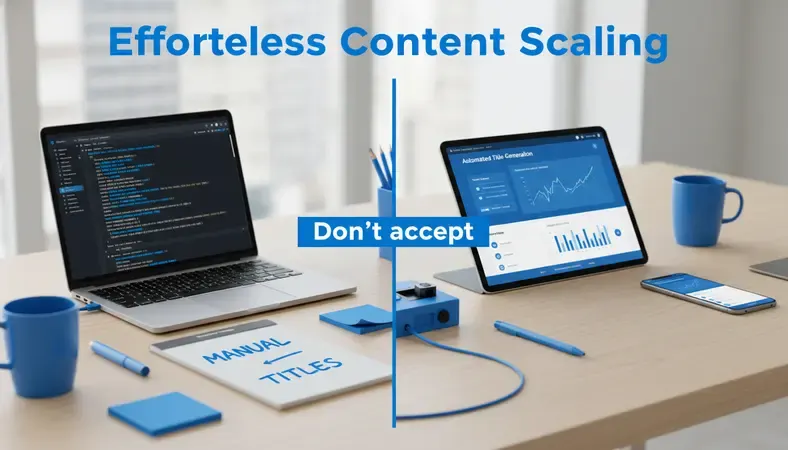
Hybrid Approach Benefits
Most successful content teams use generators for initial ideas, then manually refine based on brand guidelines and content specifics. This combines speed with personalization.
Start with 10-15 generated options, identify the strongest elements from each, then craft 2-3 manual variations that incorporate those elements with your unique angle.
Integrations with SEO Platforms
Content Management Systems
Many SEO title generators integrate directly with WordPress, allowing real-time optimization suggestions as you write. Plugins like Yoast and RankMath include basic title generation features.
These integrations often provide immediate feedback on title length, keyword usage, and readability scores without leaving your writing environment.
Analytics and Testing Platforms
Advanced generators connect with Google Analytics and Search Console to show historical performance data for similar titles. This helps predict which approaches might work for your specific audience.
Some tools integrate with heat mapping software to track how different titles perform in terms of user engagement and conversion rates beyond just clicks.
Social Media Optimization
Tools like CoSchedule's Headline Analyzer consider both SEO and social media performance, generating titles optimized for multiple channels simultaneously.
This becomes important when your content strategy includes social promotion, as titles that work well for search engine optimization don't always perform well on social platforms.
Improving Click-Through Rates with Optimized Titles
Understanding Search Intent Matching
Click-through rates improve dramatically when titles clearly match what searchers expect to find. Analyze the current top 10 results for your target keyword to understand the dominant intent.
If most results are comparison guides, don't create a basic definition article with a how-to title. Match the intent, then differentiate through angle or depth.
Psychological Triggers
Certain words and phrases consistently improve CTR across industries. "Free," "new," "proven," and "expert" can increase clicks when used authentically.
However, avoid clickbait that doesn't deliver. Google tracks user behavior signals, and titles that generate clicks but immediate bounces can hurt rankings over time.
Mobile Optimization Considerations
With mobile-first indexing, consider how your titles appear on smaller screens. Shorter titles often perform better on mobile devices where screen real estate is limited.
Test your titles on actual mobile devices to see how they display in various search interfaces and social media platforms.
Key Insight: The best SEO title generators combine automation with human judgment. Use tools for speed and data insights, but always apply manual refinement based on your specific audience and brand voice.
Common Questions About SEO Title Generators
How accurate are AI-generated titles for SEO?
AI-generated titles can be highly effective when properly prompted with specific keywords and intent information. However, they require human review for brand alignment and accuracy. The best results come from using AI for initial ideas, then manually refining based on your specific audience and competitive landscape.
Modern AI tools like ChatGPT understand context well enough to create engaging, relevant titles. The key is providing detailed prompts that include your target keyword, content type, audience, and any specific requirements like character limits or tone preferences.
Should I use the exact title a generator suggests?
Rarely. Use generated titles as starting points rather than final versions. The most effective approach involves generating multiple options, identifying strong elements from each, then crafting a final version that incorporates those elements with your unique brand voice and specific content angle.
Consider factors the generator might miss: your brand personality, specific audience terminology, or competitive differentiation opportunities that require human insight.
Do SEO title generators work for all industries?
Effectiveness varies significantly by industry complexity and audience sophistication. Generators work well for straightforward topics like consumer products, how-to content, and general business advice. They struggle more with highly technical fields, regulated industries, or niche B2B topics that require specialized knowledge.
For complex industries, use generators for structural inspiration rather than complete titles. The tool might suggest effective formulas like "X vs Y: Complete Comparison" that you can adapt with industry-specific terminology.
Can title generators hurt my SEO rankings?
Poor-quality generators that create generic, keyword-stuffed titles can potentially harm rankings by reducing click-through rates or creating titles that don't match content. However, reputable tools from established SEO platforms generally follow current best practices.
The bigger risk comes from over-relying on automation without human oversight. Always review generated titles for accuracy, brand alignment, and genuine value proposition before publishing.
How often should I update titles generated by these tools?
Monitor title performance monthly through Google Search Console. If click-through rates remain below 2-3% after 90 days, consider testing new title variations. However, avoid frequent changes that might confuse search engines or disrupt established rankings.
Focus updates on titles for high-traffic pages where small CTR improvements create significant traffic gains. For newer content, give titles at least 60-90 days to establish performance baselines before making changes.
Wrapping Up
The right SEO title generator depends on your specific workflow, technical requirements, and content volume. AI tools like ChatGPT excel at creative, contextual titles but require manual SEO verification. Dedicated SEO platforms provide data-driven suggestions with built-in optimization features but may lack creative nuance.
Most successful content teams use a hybrid approach: generators for speed and initial ideas, manual refinement for brand alignment and competitive differentiation. Optimize your content strategy at LinkLoop with automated backlinks and content tools designed specifically for adult site SEO success. Ready to get started? Visit LinkLoop to learn more.
Leave a Reply